Showing posts with label islam. Show all posts

Monday, 11 May 2009

Understanding the differences between Shi'ite and Sunni Islam

Vali Nasr's The Shia Revival: How conflicts within Islam will shape the future is a fast-paced and readable account of the history and current state of Shi'ite Islam. He covers the original schism between the followers of Ali (Muhammed's cousin) and the ruling Caliphs - a schism which may appear to be about religion now, but was essentially a power struggle. Most importantly, Nasr explains what the differences and animosities are now.

Shi'ites believe that the 12 Imams were able to extract an esoteric understanding of Islam that Sunnis don't believe exists. Sunnis insist that religious sources must be read literally and that the 12 Imams didn't have any deeper understanding than can be achieved by laymen.

Sunnis believe that worldly power, order and control embody a government with legitimacy, whereas Shi'ites believe legitimacy stems from being the best of Muslims (hence their support for Ali as the true Caliph and opposition to the Umyyad and Abbasid monarchies). Being in power and the Imams' failure to take power is taken by Sunnis as evidence against the right of the Imams to rule.

Sunnis don't believe that the Imam's have any better/deeper/esoteric or more insightful knowledge of Islam and don't believe in an intermediary between man and God. Sunnis also believe that the Shi'ite reverence for the Imams and other members of the Prophet Mohammed's family is heretical. For some Sunnis, even the Prophet Mohammed is not to be exhalted above any other Muslim. The Qu'ran is the only direct link to God.

Shia theologians reasoned that the [Twelth] imam's withdrawal must mean that in the interim before his return, political authority could never escape imperfection. Until the end of occultation, there could be no true Islamic rule, and anyone who claimed to be setting up such a regime would by definition be a pretender. Their goal from then on was to keep faith until the imam's return. Vali Nasr, The Shia Revival: How conflicts within Islam will shape the future

Henry Corbin characterised Shi'ism as Islam iraniene. My Iranian friend Kamran explained it to me thus: in order for Islam to consolidate itself as the state religion, it had become "Persianised" rather than the Persians becoming "Arabised". Appealing aspects of Zoroastrianism, rather than being left behind, were incorporated into Persian Islamic thought and practice. Islam colonised Persia and supplanted Zoroastrianism, but Zoroastrianism's revenge has been to fundamentally alter those parts of Islam is came into contact with.

The Islamic conquest of Persia and led to the demise of Zoroastrianism and the rise of Islam in Persia, but Shi'ism only really established itself in Persia when the Abbasid dynasty establish Shi'ite Islam as the state religion.

That is much like Christianity's encounters with animist local religions in Africa and South America, where attempts to completely displace the local gods and religious power-structure were not always successful. Either the missionaries themselves co-opted the local gods to their cause or they allowed the congregationists to take a lunch-buffet approach to their religion: snack on the interesting/meaty bits and leave the religious celery (bland, of no real use) for someone else. Or the Hare Krishna movement in the West (where Krishna has, for all intents and purposes, become nothing more than a blue Jesus).

There are still those aruging that Shi'ites aren't Muslim or wishing "Death to the Shi'ites!".

Wednesday, 25 February 2009

More on Science and Islam, Arabic loan words in English

One of Jim al-Khalil's arguments in Science and Islam is that Muslim scholars, astronomists and mathematicians gathered the data that Copernicus, Galileo and others used in working out their theories. As Isaac Newton claimed to be standing on their shoulders of giants, so it happened that those before him had stood on Muslim shoulders and those Muslims had been standing on Greek, Roman, Persian and other shoulders.

Looking at the influence of Arabic on other languages, the use of Arabic loan words in English shows the lasting effect of those ideas and concepts which may have either been non-existent or undefined in other languages before being expressed in Arabic. Algebra, alcohol, alchemy and algorithm are all important scientific words coming directly from Arabic.

In his biography Long Walk To Freedom Nelson Mandela uses the existence of

a recurring argument among the political prisoners on Robben Island, on the question of tigers in Africa. One group insisted that tigers were native to India and Asia, and quite exotic to Africa. The others were just as adamant about Africa as the tiger's natural habitat. In fact, they would argue, there were still many of them around; some went so far as to vouch that they had seen tigers in the African jungles with their own eyes. Mandela's view was particularly illuminating:

"I maintained that while there were no tigers to be found in contemporary Africa, there was a Xhosa word for tiger, a word different from the one for leopard, and that if the word existed in our language, the creature must once have existed in Africa. Otherwise, why would there be a name for it?" (source ANC website)

Conservative Christians often claim the Bible condemns homosexuality. It's a difficult claim to defend given that the concept of homosexuality wasn't created until sometime around 1869. Before then there were acts that were prohibited and persons who engaged in prohibited acts. The concept of a homosexual, even though there were undoubtably lots of homosexuals, hadn't been invented.

It is remarkable how different cultures mix, what persists through the ages and why. The following anecdote about how 'Allah' became 'Ole' puts an interesting spin on packed crowds in football stadiums chanting 'Ole! Ole! Ole!' as their team scores a goal.

Then she went on to describe how centuries ago in the deserts of North Africa, people used to get together for moonlight dances celebrating sacred entities that would go on for hours and hours. Every once in a while, very rarely, something would happen and one of the performers would be imbued with something transcendent.


"And I know you know what I'm talking about," she said. "Because I know you've all seen at some point in your life a performance like this."

It's as if time stopped, and the dancer stepped through a portal. He wasn't doing anything different than he'd done a thousand times before, but for some reason everything was aligned and he no longer appeared to just move. Instead, he seemed to be lifted from within and below.

"And when this happened, people knew it for what it was," she said. "They called it by its name. They'd put their hands together and would start to chant Allah, Allah. 'God, God.'"

As an aside, she noted that when the Moors invaded southern Spain they brought this custom with them, but the pronunciation changed over the centuries from chanting Allah, Allah, Allah to chanting Ole, Ole, Ole, which is now heard at bullfights and flamenco dances when a performer does something incredible. (Source: Wired)

The strange thing about culture is that all cultures owe a debt to those they have come after, and even to those they are a reaction to.

Thursday, 19 February 2009

Religious lunatics try to keep women down in Afghanistan

The war in Afghanistan is still going on, but the real war is a civil war between decent Afghan people and religious lunatics trying to keep women down who will stop at nothing to deny them basic rights such as the right to education. We can only hop that groups like the Revolutionary Association of the Women of Afghanistan still have the stomach for the struggle they're involved in. I suspect they might still have it.

Tuesday, 10 February 2009

BBC documentary series Science and Islam

The BBC in the UK has just shown a 3 part series Science and Islam. Parts of the series are available on YouTube (other blogs have all the links, and they're available on certain peer-to-peer filesharing websites. Here is a taster:

Not only was this a fascinating documentary series, well put together, great locations and a nice antidote to the "What did Islam ever give us?" rhetorical questions. That's all despite lots of shots of presenter Jim al-Khalil standing around holding his little brown notepad, staring at exotic looking piles of dirt.

In his exposition of Shi'ite Islam Muhammad Husayn Tabatabaei explains the Islamic sciences as being:

divided into the two categories of intellectual ('aqli) and transmitted (naqli). The intellectual sciences include such sciences as philosophy and mathematics. The transmitted sciences are those which depend upon transmission from some source, such as the sciences of language, hadith, or history. (Shi'ite Islam, trans. Seyyed Hossein Nasr, p. 104-105)

But al-Khalil never really establishes his scientists as Islamic scientists any more than they were Persian, Syrian, Palestinian or Spanish. Their religious identity, or that part of their identity that could be called Muslim, was never really discussed. The result was something less than an insight into Islamic science than an insightful history into scientific contributions from men who just happened to be Muslims/living within the great Muslim empire and seats of learning. Interestingly, the word 'scientist' is a relatively recent creation, whereas mathematics has a much richer history.

In what seemed like a rushed closing, al-Khalil lays much of the blame for the decline of Islamic science, more so than science in Islamic culture, at the door of those countries (Spain, France, Portugal, Great Britain, etc.) expanding into the New World after the discovery of America. He makes no effort to explain the cultural and religious shifts within Islamic countries themselves and brushes away the changes as a reaction to what was happening in the West.

Sunday, 8 February 2009

White, Welsh and Muslim

A fascinating look into the life of Muslim converts in Wales. It doesn't delve too deep into the theology of the converts, but does show the UK public's attitude to the niqab quite nicely. I wish they'd looked a bit more closely into whether they'd originally thought Jesus was the son of God/saviour of all mankind and they were now rejecting that or whether they were only nominally Christian (as in theists raised Christian).

Omer, the oldest of 3 convert brothers is an articulate and affable chap who manages to throw in a little bit of Welsh nationalism too.

Tuesday, 13 January 2009

No god but God and the fight for Islam's heart

It will take many more [years of violence] to cleanse Islam of its new false idols—bigotry and fanaticism—worshipped by those who have replaced Muhammad's original vision of tolerance and unity with their own ideals of hatred and discord. But the cleansing is inevitable, and the tide of reform cannot be stopped. The Islamic Reformation is already here. We are all living in it.

Thus ends Reza Aslan's No god but God: The Origins, Evolution and Future of Islam, an apologia for and defence of Islam.

Early in the book Aslan states that there is no "clash of fundamentalisms" nor "clash of civilisations", but rather a civil war within Islam for the heart and soul of the faith. His emphasis is on the faith, not the religion. The religion is the schism, the splits, the murderous rampages, the desecration of rival sects' mosques and the power struggles. The faith is that there is no god by God, that all men are equal before God, etc.

YouTube is awash with videos from keyboard jihadists fighting against their co-religionists by making slideshows denouncing shirk, Shi'ite and Sufi kufar. The influence of Deobandi, Salafist, Wahhabi theology and frequency with which other Muslims are denounced as apostates is not something new in the years since the terrorist attacks on New York. And neither is the progressive, inclusive response in Islam.

Whenever people talk about Christianity, the West, Islam, the Middle East, Iran, Israel, Gaza, etc. they find it so easy to gloss over the very real diversity and division of opinion, faith and belief, seeing everything and everyone as monolithic, homogenous blocks. Islam has a long history of internal conflict and bloodshed, but also a long history of a struggle to include not only all Muslims, but other monotheists within its greater Ummah.

The problem for people like Reza Aslan is not that they are fewer in number, but they lack the example of a government that respects freedom and human rights, the backing of a state with natural resources and the support of a media hell-bent on showing all Muslims as an unfathomable enemy.

There is no god but God

Friday, 12 September 2008

There is no compulsion in religion. Except for women.

Being neither a Muslim, nor a scholar of Islam, I wonder how Muslims reconcile what appear to be cultural and social compulsions that receive a religious legitimacy from their faith?

Let there be no compulsion in religion. Truth has been made clear from error. Whoever rejects false worship and believes in Allah has grasped the most trustworthy handhold that never breaks. And Allah hears and knows all things. [Sûrah al-Baqarah: 256]

So what can we say when a father murders his daughter for not wearing a hijab? No tabloid paper is going to pick up this news story and run it under the headline "Muslims condemn sickening brutality in name of Islam", because that's not their line on anything to do with Islam and because there is no outcry.

Turkey and France ban the hijab in universities. German states ban the hijab for teachers. More young Muslim women are adopting the hijab as an expression of defiance and an assertion of Islamic identity. But compulsion, force and violence in the name of Islam, persist in Iran, Saudi Arabia, Afghanistan, etc.

I listened to a girl wearing a hijab working in Primark explaining to her work colleagues (another teenage girl) why she wore the hijab:

It's part of my religion. It's a religious symbol.

But isn't it a cultural symbol from part of the Middle East and now a religious fashion statement? Modesty doesn't mean a rejection of beauty. It is less about appearance and more about humility, the way your carry yourself and the way you treat others. There is no modesty in forcing your opinions or culture onto someone else. That's chauvinism.

Thursday, 5 June 2008

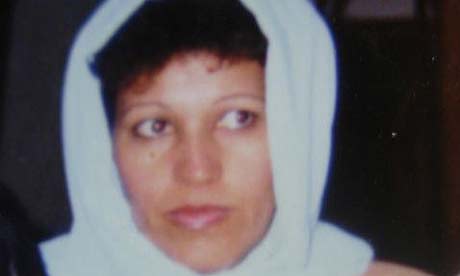
Mourning the murdered mother of a murdered Iraqi girl


Leila Hussein became known around the world for refusing the accept the brutal murder of her daughter, Rand Abdel-Qader. Rand was kicked and stomped to death by her father and brothers. Her father is reported as saying:

My daughter deserved to die for falling in love.

... even though her falling in love was nothing more than a schoolgirl crush. Her brave mother refused to accept the murder of her daughter as a cultural/religious necessity to cleanse the family of shame. Aligning herself with Iraqi feminists (because who else was going to shelter her?) she was murdered 3 weeks later.

The sad truth remains that in many countries in the world:

[a]ny woman who does not submit to her role as a passive piece of human garbage is a potential target in a patriarchal society scarred by years of violence.

Nobody will be punished for either of these crimes. When Du'a Khalil Aswad was crushed, kicked and stamped to death by the men in her family, videos put on the internet showed the police just standing by and watching.

Even in the UK female genital mutilation happens, forced marriages happen and girls are murdered by their families because of who they befriend or are attracted to. Why? Maybe a clue lies in the inability to challenge the communities and attitudes that allow these things to happen.

Whilst debating Ayaan Hirsi Ali, the thoroughly British former Islamist Ed Hussein can't quite bring himself to properly condemn stoning. He doesn't like it, but his condemnation is weak and spineless. He should have been angry, clear and ferocious in his denunciation of the violence against women in the Middle East, Europe and, sadly, in the UK. That lack of strength of conviction and anger from even progressive Muslims and missing discourse in Islam helps people like Leila Hussein's husband get away with their crimes.

Wednesday, 30 April 2008

Religious conversion

If you float around on YouTube for long enough, you'll find videos of anything. Here are three showing people converting to and from different religions.

Converting to Judaism

From non-practicing Judaism to Hasidic Judaism...

Conversion from Judaism to Islam

Conversion from Christianity to Islam

Conversion from Islam to Christianity

Monday, 28 April 2008

The truth is, there are many Islams

Islam, like Christianity, is a religion beset with internal conflicts. Just as there are many interpretations of Christianity with emphasis on different parts of a shared history and a history of conflict, denunciation, accusations of heresy, reformations and counter-reformations, so too with Islam. Accusations of shirk and massacres of co-religionists are, sadly, not confined to just Wahhabists. There are those that see the current rise in terrorism carried out by Muslims are a sign, not of conflict between East and West but a war within Islam between absolutists and those who seek, respect and wish to save a pluralist religious community.

Ed Hussein, author of The Islamist, shines some light on this:

Islam is not a monolithic entity. Inherent within Muslim tradition is a plurality of thought, practice and reasoning that can help create a genuine Muslim renaissance or tajdid in Arabic. Just as scriptural references to stoning and flogging are cited by countries such as Saudi Arabia as justification for their horrid practices, in these same texts, we find that the Prophet Muhammad reprimanded his followers for stoning a person who attempted to flee. He also condemned those who killed innocent people. By drawing on these lessons, mainstream Muslims must illustrate that compassion, humanity and sense should override scriptural rigidity understood with anger and revenge.