Friday, 23 May 2008

Seven Valleys of Love, new Iranian poetry anthology

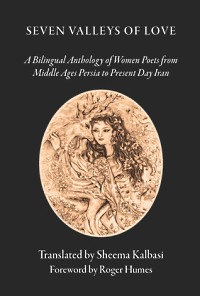
seven_valleys_of_loves.jpgA new book of poetry called Seven Valleys of Love by Sheema Kalbasi looking at the works of Iranian female poets from Middle Ages Persia to contemporary Iran. (Hat tip to Kamangir)

Those Days

Those days

Poetry

Was my room

And wherever I felt unsafe

I gravitated into its eternal sanctuary.


These days

There aren’t any rooms

That can harbor me against the crowd

and behind every window

inside and outside every room

a two-faced clown sneers.


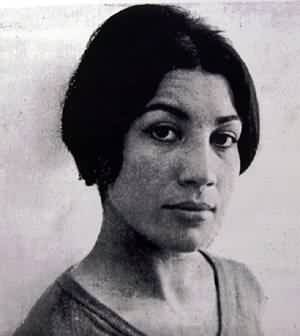
Fereshteh Sari (more samples from the book )


The book can be purchased online on Amazon. Some donations will proceed to a breast cancer research center in Connecticut.

It may not seem as though there have been many Iranian female poets or writers published, but there are certainly more than any other country (bar Israel) in the Middle East. There are several good anthologies of Iranian womens' fiction out there too. I think Palestine, Iran and maybe Lebanon stand out as being the countries in the region with the most thriving literary cultures.

Tuesday, 20 May 2008

Bathing by Forough Farrokhzad (فروغ فرخزاد) / Persian poetry

I shed my clothes in the lush air
to bathe naked in the spring water,
but the quiet night seduced me
into telling it my gloomy story.

The water's cool shimmering waves
moaned and lustily surrounded me,
urged with soft crystal hands
my body and spirit into themselves.

A far breeze hurried in,
poured a lapful of flowers in my hair,
breathed into my mouth Eurasian mint's
pungent, heart-clinging scent.

Silent and soaring, I closed my eyes,
pressed my body against the soft young rushes,
and like a woman folded into her lover's arms
gave myself to the flowing waters.

Aroused, parched, and fevered, the water's lips
rippled trembling kisses on my thighs,
and we suddenly collapsed, intoxicated, gratified,
both sinners, my body and the spring's soul.

Original published in Deevar (The Wall). This translation comes from Sholeh Wolpé's Sin. Amazon has a whole bunch of Forough Farrokhzad poetry collections in translation.

Saturday, 17 May 2008

Sin by Forough Farrokhzad (فروغ فرخزاد) / Persian poetry

I have sinned a rapturous sin
in a warm enflamed embrace,
sinned in a pair of vindictive arms,
arms violent and ablaze.

In that quiet vacant dark
I looked into his mystic eyes,
found such longing that my heart
fluttered impatient in my breast.

In that quiet vacant dark
I sat beside him punch-drunk,
his lips released desire on mine,
grief unclenched my crazy heart.

I poured in his ears lyrics of love:
O my life, my love it's you I want.
Life-giving arms, it's you I crave.
Crazed lover, for you I thirst.


Lust enflamed his eyes,
red wine trembled in the cup,
my body, naked and drunk,
quivered softly on his breast.

I have sinned a rapturous sin
beside a body quivering and spent,
I do not know what I did O God,
in that quiet vacant dark.

Original published in Deevar (The Wall). This translation comes from Sholeh Wolpé's Sin. Amazon has a whole bunch of Forough Farrokhzad poetry collections in translation.

Persian poetry in English / Forough Farrokhzad

"Why are you wasting your time on that whore?" is the question poet and translator Sholeh Wolpé kept being asked when talking about her book of Forough Farrokhzad poems. And it's 40 years since Forough died, so that's a powerful legacy.

Forough Farrokhzad (Persian: فروغ فرخزاد) wrote provocative poetry, full of challenge, defiance, taboo-breaking and lived her life in the same way. Her short life was a whirlwind of scandal (sometimes self-created, sometimes not), rejection by the male-dominated publishing and poetry/arts establishment, but also devotion from Iranians. Always an outsider and, given Iran's reactionary turn since the ousting of the Shah, guaranteed to stay that way. But that doesn't mean that Iranian's don't read her poetry or take it into their hearts.

A selected works in English and in Persian is available online. I'm going to post up several of her poems. YouTube has some videos about her and of people reading her poems (and more and more).

Friday, 9 May 2008

No talent not wanted in Bahrain

Islamists in Bahrain aren't happy that Haifa Wehbe has a concert there. But not because she's got no real talent and her songs are rubbish.

Wednesday, 30 April 2008

Religious conversion

If you float around on YouTube for long enough, you'll find videos of anything. Here are three showing people converting to and from different religions.

Converting to Judaism

From non-practicing Judaism to Hasidic Judaism...

Conversion from Judaism to Islam

Conversion from Christianity to Islam

Conversion from Islam to Christianity

Monday, 28 April 2008

The truth is, there are many Islams

Islam, like Christianity, is a religion beset with internal conflicts. Just as there are many interpretations of Christianity with emphasis on different parts of a shared history and a history of conflict, denunciation, accusations of heresy, reformations and counter-reformations, so too with Islam. Accusations of shirk and massacres of co-religionists are, sadly, not confined to just Wahhabists. There are those that see the current rise in terrorism carried out by Muslims are a sign, not of conflict between East and West but a war within Islam between absolutists and those who seek, respect and wish to save a pluralist religious community.

Ed Hussein, author of The Islamist, shines some light on this:

Islam is not a monolithic entity. Inherent within Muslim tradition is a plurality of thought, practice and reasoning that can help create a genuine Muslim renaissance or tajdid in Arabic. Just as scriptural references to stoning and flogging are cited by countries such as Saudi Arabia as justification for their horrid practices, in these same texts, we find that the Prophet Muhammad reprimanded his followers for stoning a person who attempted to flee. He also condemned those who killed innocent people. By drawing on these lessons, mainstream Muslims must illustrate that compassion, humanity and sense should override scriptural rigidity understood with anger and revenge.

Sunday, 6 April 2008

Life goes on in Tehran

Life goes on in Tehran is a monthly photo-essay from an Iranian-American working in Tehran. The start of each month sees the author/photographer uploading 20-30 new photos, taken on either a camera phone or digital SLR camera. He seems to capture the mundane and the marvelous, the peculiar and day to day lives of the people he meets.

Being an Iranian-American he's both and insider and an outsider. This shows through in his insights and the oddness and beauty he stumbles upon. Sometimes it comes in the form of high-heeled shoes, apartment blocks, posters, Iranian TV, food, Christmas in Tehran and more.

This really is one of my favourite websites about Iran. It's not treating the country as a theocratic freakshow like some blogs do, but it doesn't try to sidestep "the issues" when they stumble into the photographer's viewfinder. If you've never seen it before, you're lucky. It's been going for over 12 months now, so you've got loads of photos and stories to work through. It's something to look forward to each month.

www.lifegoesonintehran.com

Thursday, 14 February 2008

Learning a little more about Syria

My wise Syrian friend made me laugh as we picked over some (surprisingly cold) lentil kibbeh. He couldn't get his head around wanting to find the best Bashar al-Assad, Ba'athist and Pan-Arabist kitsch (posters, keyrings, flags, silhouette car stickers). The sticker shop next door to the Young Pioneers shop just off Hamidiya Souq has stickers and posters, but there's nothing spectacularly kitsch.

I had always assumed the crackdown on the Damascus Spring was a sign of al-Assad's early days, or weakness, in relation to more established members of the Syrian government. My friend set me straight on this. Bashar al-Assad had 6 years after Basel died to prepare himself for running Syria. He didn't come into control of the Syrian government in a weak position. He was in control and in power before he was President.

But why Bashar's recent obsession with all things Arabic? Why give speeches about the importance of Arabic, pass legislation to ensure children are given Arabic names, etc?

"Nasser," said my friend, "He's modeling himself on Nasser."

Saturday, 5 January 2008

Review of Danny Postel's Reading Legitimation Crisis in Tehran: Iran and the future of liberalism

Reading Legitimation Crisis in Tehran: Iran and the future of liberalism is a short essay by Danny Postel (senior editor of openDemocracy). It focuses on the failure of liberals in the US and Europe to act in solidarity with Iranian liberals, trade unionists, human rights groups and feminists in the way they did with Central America in the 1980s, explores the way liberal ideas and philosophers have impacted Iranian political discourse, explains how and why Foucault mis-read the revolution and ends with an interview with Ramin Jahanbegloo. Always interesting to see what academics from inside Iran think, but something about Jahanbegloo's confidence about liberals and liberal activism doesn't quite sit right. He's very dismissive of Iranian socialists:

DP: Why, in your view, are Iranian intellectuals and students not generally attracted to Marxist thinkers and ideas? Why do you think they tend not to be engaged by political currents like the anti-globalisation movement or anti-imperialism?

RJ: It is not necessary to explore very far to find the reason for this lack of attraction to Marxism in Iran today. In Iran the number of "Marxists" was always a hundred times greater than the number of people who had actually read and studied Marx. This is the main reason why Iranian Marxism had so much trouble making sense of the Iranian Revolution. The Tudeh Party and the leftist groups have no explanation today of their political and ideological struggles against liberal and democratic ideas in Iran. Most of these Marxist groups supported the anti-democratic measures taken against women and against Iranian liberals... I ask you the question: what do you think is left of the Left in Iran? Nothing!

The major Iranian left-wing, socialist and Marxist parties from before the Iranian Revolution may have almost zero presence and no support inside Iran, but Iranian socialists and trade unionists are still raising their voices. Iranian trade unionists trying to establish independent unions are routinely harassed by the government. During the recent student protests the slogans are those of left-wing and liberal ideas.

I fear that Jahanbegloo's "intellectuals" are not very representative of all Iranian students or the Iranian population as a whole. How many Iranians are actually reading Arendt, Habermas, etc? Jahanbegloo says young Iranians are no longer drawn to "utopian ideas". But the demands socialists in Iran are making are concrete, urgent and realistic. There's nothing utopian in asking for women's rights, an end to political repression, extra-judicial killings, goon squads harassing union activists and students or for free speech.

Postel's book doesn't address the nature of support for the government and Islamic Republic within Iran. With 17 million votes in the last presidential election, Ahmadinejad must have some supporters. Whether they're members of the industrial, city-dwelling working-class, Basij, peasant saffron-pickers getting a pay rise, middle-class bureaucrats, revolution-era religious true-believers or clerics - Postel and Jahanbegloo never really explain it. Without that clarity - without an understanding of the cultural, political, economic and religious support for the Islamic Republic - how does Postel think Americans and Europeans can overcome the cultural and language barriers and understand how they can act in solidarity and with whom?